RV awning repair: tape, new fabric or a whole new awning?
By Tammy Rourke · September 8, 2026 · updated September 11, 2026
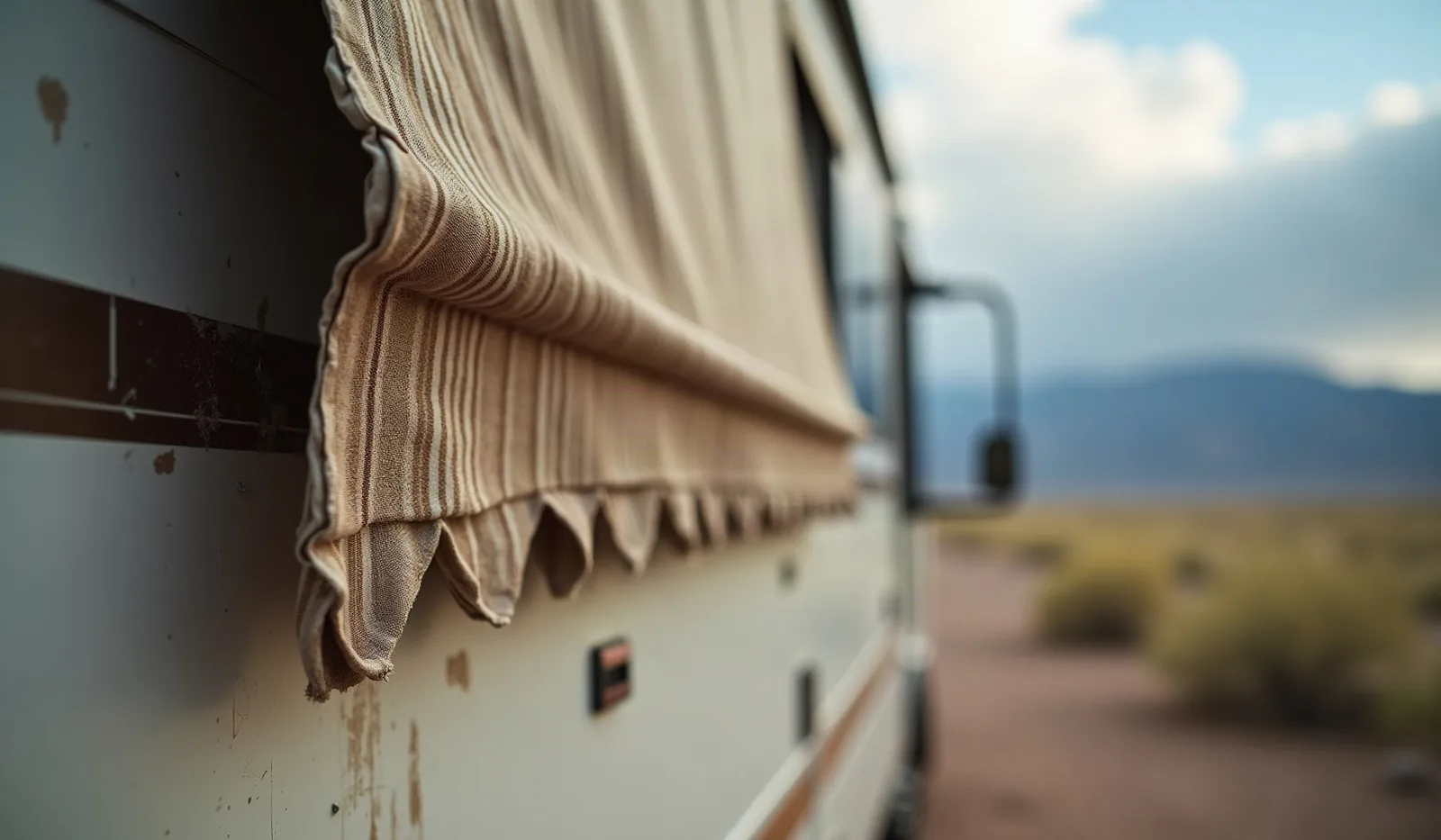
The first real monsoon gust of the season hit our Mesa street at 4:12 on a Tuesday afternoon in July. I was inside my Class A listening to the awning over the door rattle like a tin roof. My neighbor had left his half out, forgot to retract it, and it went off like a rifle shot. Fabric shredded, roller tube bent, and the arm folded back into the side of his trailer. Mine was still out from a grocery run, and the wind had already popped one rivet by the time I got to it. That sent me back through RV awning repair in Phoenix, because around here the monsoon eats awnings for breakfast.
I spent sixteen years doing fiberglass and gelcoat work before I went full-time, and I keep seeing the same thing on the road. Awnings are the most ignored piece of equipment on an RV until they quit. Then the whole question comes down to tape, new fabric, or a whole new assembly. Here’s what all that costs, and what I’ve learned doing it.
Manual vs 12-volt power awnings: know what you have
A manual awning uses a pull strap and a cam lock to hold the roller tube where you put it. The tension comes from a torsion spring inside the tube. A power awning has a 12-volt motor, a switch, and sometimes a wind sensor. Both fail. They just fail different ways.
On a manual awning the usual trouble is torn fabric at the edges or a weak spring. On a power awning you get low voltage, a blown fuse, a bad switch, or a dead motor. One owner’s battery bank sat at 11.8 volts, and that motor pulled way too many amps trying to start itself.
Small tears and pinholes: when tape is enough
If the tear is under about six inches and the fabric still bends without crunching, tape is the cheapest fix your going to find. Clean it with alcohol, get it bone dry, and lay awning repair tape on both sides. Round the corners so it won’t peel. I’ve seen taped pinholes hold two years when the hole came from a barbecue spark.
Tape runs about $15 to $40 a roll at most parts counters. It won’t hold on seams or anywhere near the roller tube. Too much flex, it pulls loose.
When the fabric is done: new fabric vs whole awning
Big tears, failed seams, fabric that’s crunchy and bleached white from the sun. That means new fabric. You’ll be picking between vinyl and acrylic. Vinyl costs less, weighs more, and mildews if you put it away wet. Acrylic breathes, lasts longer, and costs more for that privilege. The fabric alone is roughly $150 to $500 depending on the rig, and labor runs $300 to $1,000 depending on who’s doing it.
So when do you quit on a repair and buy the whole awning? Bent arms, cracked roller tube, dead motor plus shot fabric all at once. Then a new assembly makes more sense than piecing it back together. A full patio awning runs about $1,000 to $3,000 or more installed, and a long power awning runs higher.
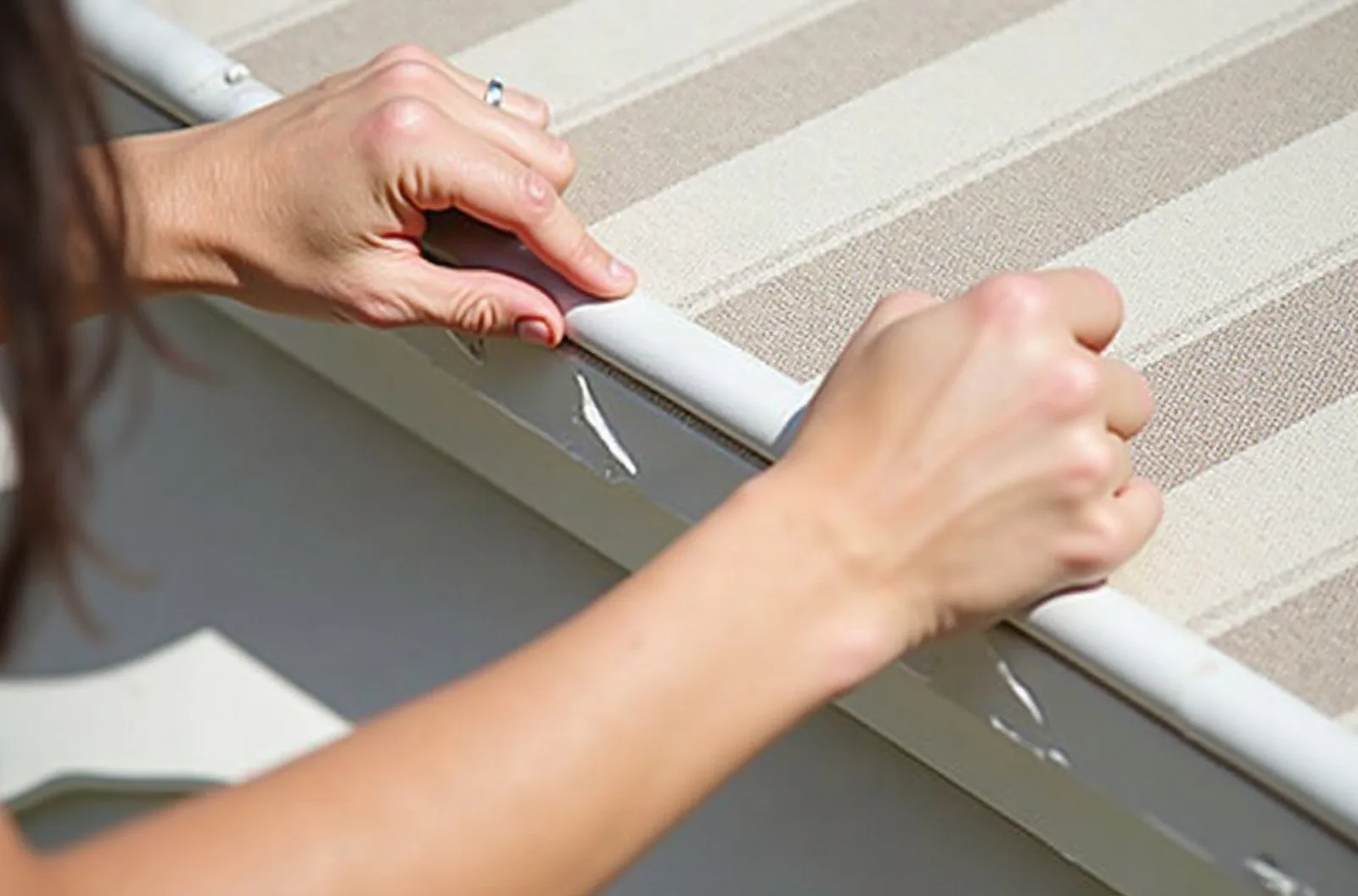
I found a video that walks through the fabric repair process step by step, so you can see exactly what to expect.
Bent arms and roller tube damage
Once those arms bend, the thing never deploys or retracts square again. You can sometimes replace a single arm or a gas strut, but if the tube is bowed or the end caps cracked, I’d stop and think hard about the whole unit.
A bent arm usually means the awning saw wind it should not have seen. I lost one at a grocery store once. Left it out for 30 minutes, dust devil came through. Lesson learned.
Power awning motor failures: check voltage first
About half the dead power awnings that show up are not dead at all. Below 12.0 volts, the motor just won’t go. Charge the batteries or plug into shore power and try the switch again.
Voltage looks good? Then check the fuse, usualy in the 12-volt fuse panel. Then jump the wires at the switch to test it. If the motor still won’t run after all that, it’s probaly the motor or the control board. A replacement motor runs roughly $150 to $500 for the part, plus an hour or two of shop labor to install it. But hold on before you order that motor.
Insurance and the wind: comprehensive usually covers it
Wind damage to an awning usually falls under comprehensive on your RV policy, minus your deductible. Gust catches you at 25 mph and rips the fabric or bends the arms, call your insurer. Take photos before you touch anything. Get a written estimate from a shop. My own insurer covered new fabric after a monsoon gust, less my $500 deductible, and it was worth it.
But read your policy first. Some insurers exclude awnings unless you bought a rider, and some will raise your rate after a claim. If the damage is small, tape or new fabric out of pocket might be cheaper than the deductible plus the rate increase. A whole assembly at $2,500? That’s what claims are for.
If you want RV awning repair specialists across the country, that page lists shops that actually know awnings. And when the same wind opened up your roof seam, our post on how to repair RV roof leaks yourself, and when the decking says call a pro walks you through how far to go before you pick up the phone.
Call the mobile tech or do it yourself?
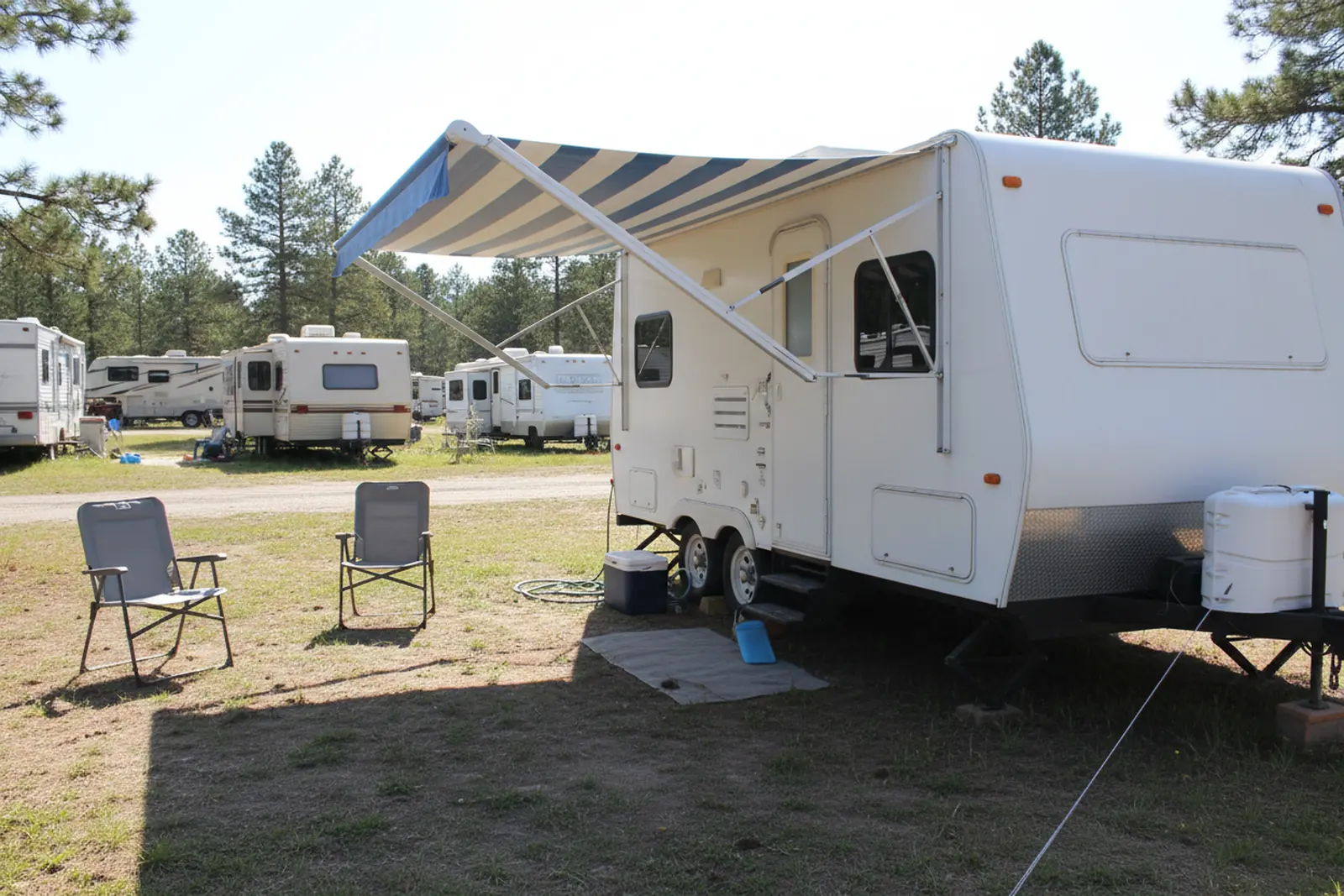
A mobile RV tech can do fabric, a motor, or a whole awning right in your campsite or driveway. They bring the parts and the spring tools so you don’t have to fight that yourself. Expect a trip fee of $75 to $200 plus $100 to $175 an hour. Most of these jobs run two to four hours, so $300 to $900 in labor plus parts. If you’re stuck at a campground, that beats dragging the rig to a shop.
Not every mobile tech will touch a manual awning spring, though. Ask before they show up. And some campgrounds wont allow outside contractors, so check the park rules. Our post on mobile RV repair: what a tech can fix in your campsite and what it costs has the full rundown on what to ask any tech before you hire them.
My honest take on RV awning repair
Give me a calm day and a helper, and I’d rather swap awning fabric then scrape old sealant off a roof in July. The spring is the part that scares people, and if you’ve ever worked with garage-door springs you know the respect that thing deserves. The real money in awning repair is working out a power problem before somebody throws a new motor at it. Half the motors I pull are still fine. The voltage wasn’t.
This weekend, go outside and actually look at your awning fabric. Pull it out three feet. Pinholes? Small tears? Chalky white streaks all over it? Now retract it and watch the arms. If they stagger or hesitate, you’re on borrowed time. Then call two local shops or mobile techs and ask what they’d charge to replace the fabric or the motor. Get it in writing. The monsoon is coming, and your awning is the first thing it will eat.
Related reading
FAQ
How do I know if my awning fabric is vinyl or acrylic?
Vinyl feels smooth and plastic, and it doesn't have much give. Acrylic is a woven fabric where you can see the threads, and it breathes, letting air and moisture move through it. Vinyl mildews if stored wet. Acrylic doesn't. Check the manufacturer tag on the roller tube or look at the fabric edge. Shiny and rubbery means vinyl.
Can I repair an awning tear with regular duct tape?
No. Duct tape won't flex with the awning, it leaves adhesive residue behind, and the sun kills it within weeks. Get the proper awning repair tape. Clean the area with alcohol, dry it, apply to both sides, round the corners. Duct tape is for an emergency only, like holding a tear closed until you get home, and it'll still leave a mess.
Why won't my power awning retract with the switch?
Check the house battery voltage first. Below 12.0 volts the motor doesn't have enough power to move. Plug into shore power or charge the batteries. Then look at the awning fuse in the 12-volt fuse panel. If voltage and fuse are good, the switch, the motor, or the control board has failed. A multimeter at the motor connector will tell you if power is even reaching the motor.
Does RV insurance cover wind damage to an awning?
Usually yes, under comprehensive coverage, minus your deductible. A sudden gust tearing fabric or bending arms counts as a covered loss. Sun-rotted fabric and old age do not. Take photos before you move anything and call your insurer. If the damage comes in under your deductible, paying out of pocket may be the smarter move to avoid a rate hike.
How long does an RV awning fabric last?
Vinyl runs about 5 to 10 years and acrylic 8 to 15, depending on sun, wind, and how offen you clean and dry the thing. Arizona UV kills vinyl faster than you'd see in the Midwest. Watch for chalky white streaks, stiffness, and edge fraying. Hail or spark pinholes can be taped, but once a seam tears, it's replacement time.
Is it safe to replace awning fabric myself?
Only if you understand the torsion spring inside the roller tube. That spring stores enough energy to break bones if it cuts loose on you. Plenty of experienced owners do thier own fabric swaps, but you need two people, the right tools, and the spring tensioning procedure from the awning manufacturer. If any of that gives you pause, hire a mobile tech or a shop. The labor is cheaper than the hospital visit.
Find RV repair near you
Compare RV service centers and mobile techs in your city, then ask a few for a quote on the job.
Browse by state